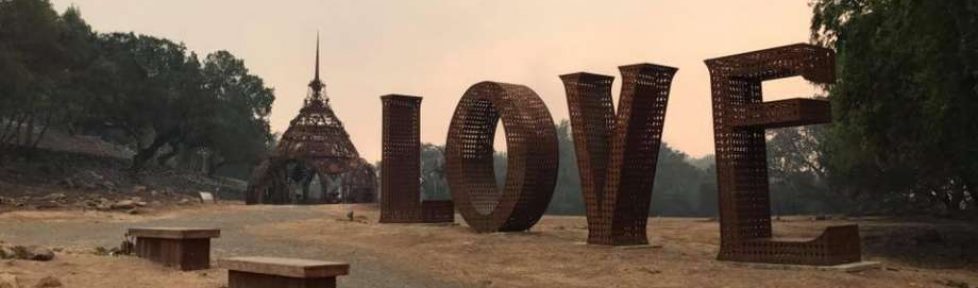
what if your “dream” isn’t that of an item to be sold or…put out into the world free of charge? That’s where Dreamus comes in. Dreamus.com allows their users to follow dreams they feel are important, add fellow dreamers to friendship lists for private communication, and comment on a users dream. On your own dream page you can also add any number of goals you hope to attain and check them off as they’re completed, giving viewers a clear of where you are in terms of your overall goal.
The Dreambox was the vision of Teddy Saunders, who created the popular “Oh The Places You’ll Go” Dr Seuss-themed viral video, which was blamed by BMOrg for causing the ticket lottery debacle. Saunders was happy to use the Burning Man connection to promote his startup in the media, saying this year to Daily Dot:
“I think we’re one of the first art installations that gave birth to an online Web platform that reaches beyond the borders of the playa and connects Burning Man participants to the outside world in a timeless way that lasts after Burning Man.”
The Dreambox has been going to Burning Man since 2012, when it raised an initial $29,277 from Burners in a successful Kickstarter campaign. It has now been to Burning Man 3 times. This year it received further funding in the form of an Art Honorarium grant from Burning Man Arts.
You think I’m kidding, or being snarky? From Daily Dot:
“Our plan with DreamBox 3.0 was to put a satellite on the DreamBox so that people could immediately share dreams,” Saunders recalls. “However, at the last minute Burning Man’s media department put the brakes on us after their art department already gave us full support as an honorarium project. It’s pretty embarrassing actually. We’re saddened that they are hesitant to allow their participants to share such beautiful intentions.”
Saunders also says there are 12 short films he created about the Dreambox project that the media team won’t allow him to release because Dreamus features a donations option—and that this is an act of “commodifying” the festival.
Is it really commodifying Burning Man, by sharing Burners’ dreams and helping them come true? Maybe the competition for donation dollars that might otherwise go to the Burning Man Project is the real reason for BMOrg’s media department putting the brakes on something their art department fully supported.
[Update 1/12/15 11:49am Australia]
Paola Baldion, who previously had spoken to us in relation to the Dreambox but asked for her comments to be confidential, has contacted us with this information:
Although (as my previous message states) I am not part of DreamBox anymore, Teddy and I were the creators of it. It was actually my original idea and vision and then Teddy joined me in the project… We both worked together really hard for a month and raised 29k on Kickstarted. Even in the Awaken video Teddy says that we created the Dreambox together. Just so in the future you can say that it was ‘teddy saunders and Paola Baldion’s vision’.
Johnny and Shuggie Otis in the KFOX studios c. 1956
As most people know if they’ve even heard of Burning Man, ‘radical inclusion‘ is a core value of burners across the cultural spectrum. It’s an oft-misunderstood value, though, and doesn’t mean people will necessarily love or even like you; it just means they’ll recognize your own stake in the culture and your place at the party, though not necessarily at their bar drinking their liquor. It’s not about phony respect or phony love; it’s about being OK with other people being themselves, even if you don’t much like who they are as individuals. Also, it’s RADICAL inclusion, not total inclusion, and there are certainly limits beyond which there is little or no tolerance. Rightfully so; we don’t radically include rapists, or people who commit assault, or murderers, like the one who showed up at the DPW ranch looking for work one year after slaughtering an acquaintance out on the highway nearby, and ended up getting handed over to the police.
I want to step outside of Burning Man for a moment, though, and present a shining example of radical inclusion that didn’t call itself radical inclusion and has nothing to do with Burning Man, burner culture, or burner history.
Last night a man namedShuggie Otisand his band played for free in a park in Reno, and the place was packed with people having a good time.
Shuggie plays Wingfield Park, Reno – PHOTO: Andy Barron/RGJ
I don’t want to cast Shuggie in anyone’s shadow; he’s a huge talent in his own right who has played on a million records you’ve heard, alongside a ton of big name musicians, for decades. He played bass on Zappa’s “Peaches en Regalia.” His song “Strawberry Letter #23” is one of the most-sampled records in history. What really draws me to Shuggie, though, is that his father was the amazing Johnny Otis, and I know that apple doesn’t fall far from the tree.
Johnny Otis is a bit old school and you might not recognize his name if you’re under forty, but I bet you’ve heard his monster 1958 hit “Willie and the Hand Jive” once or twice in your life if you’re over twenty-five, and his musical influence has been so far-reaching as to be absolutely unavoidable. He was a huge star in his day, with his own record label, a nightclub in Watts, and long-running musical variety shows on TV and the radio featuring guest musicians we’d consider ‘A’-list in retrospect, but who were often unknowns at the time. He discovered Big Mama Thornton and Jackie Wilson, and introduced them to America. He co-wrote “Hound Dog,” with Lieber & Stoller, a song that Elvis Presley took to the hoop, and both produced and played drums on the original recording of that song by Big Mama Thornton. He produced and promoted records by Little Richard, Johnny Ace, Etta James, Hank Ballard, Esther Phillips, and the great Little Walter, among many others.
Johnny Otis clearly cared about advancing his art; he took grand chances with his career for the sake of being himself; he wasn’t just skinnin’ and grinnin’ for the cameras. He brought out a lot of new black talent and unleashed it like a revolutionary weapon of radical inclusion on the youth of pre-Civil Rights America. On the side, he recorded a wide range of his own music that included outings so funky they were literally X-rated, like the album he and his band — featuring young Shuggie — recorded as “Snatch and the Poontangs.” Check out the mind-funkingly dirty bluesman’s brag that is the track “Two-Time Slim” sometime, and you’ll know Johnny Otis was the real deal.
The thing most people don’t know about Johnny Otis: he was the son of Greek immigrants, born John Veliotes, and he was white. His family lived in black neighborhoods in the ghetto when he was a kid, and his environment led him to decide while still a young man that “if our society dictated that one had to be black or white, I would be black.” He resolved to present himself to the world as a black man, and live his life and conduct his affairs accordingly. His parents weren’t happy about it, but the African-American community of the time embraced and accepted him enthusiastically, and naturally his wife, Phyllis Otis, was a black woman. Johnny Otis made being black something that, for the first time in American history, a man might choose of his own accord as preferable, given his druthers, rather than the false mark of shame and inferiority it was before he set his example.
Doing the same today would be pretentious and precious and would understandably inspire more eye-rolling than racial harmony; declaring himself black long before the Civil Rights movement got off the ground, though, took prodigious iron balls and a real commitment to solidarity with oppressed people, and to identification with his own roots as a ghetto kid, regardless of skin color. More to the point, it took a deep dedication to what we burners call “radical inclusion.” Johnny Otis was an unsung hero of Civil Rights. . . and he knew, as Dr. King taught us later, that Civil Rights are not a handout from oppressor to oppressed; Civil Rights are for everyone, everywhere, equally, not just for one race or another. Thus, Johnny Otis was a shining example of our own subculture’s most fundamental core value. He may have met a man he didn’t like from time to time, but he clearly wasn’t at all prone to denying people their rightful place in the world over superficialities, and he did us all many significant services by crossing all those lines he crossed, by standing up for what was right, and by being perfectly himself in absolute disregard of the labels applied to him — and everyone else — at birth. We lost a real American hero with an epic amount of heart in January of 2012, when Johnny Otis died at the age of ninety, his lady Phyllis still at his side after seventy years of marriage.
The show last night was delightfully energetic, deliciously soulful, and smile-inducingly expressive of a deep and shared inner joy. I got a chance to hang out with Shuggie and his brothers backstage for about half an hour while the roadies were breaking down their equipment, and as one might expect from the sons of such a high-minded and talented man, it turns out the Otis brothers are extremely friendly and genuine on top of being hugely accomplished musicians. I wish I hadn’t had such short notice about the show, or I’d have put together a nice after-party for the band, Reno style. These guys may not know it, but they would fit right in if they ever came out to Burning Man.
Keep it sweet, Shuggie. You and your family will always have friends and admirers in Reno, and in Black Rock City.
Johnny Otis presents Shuggie and Frank Zappa on his radio show, c. 1970