Your Own Art Car? Wunder’s Rockbox on the Auction Block

by Whatsblem the Pro

Photo: wwardlaw

Photo: wwardlaw

Derek Wunder has been going to Burning Man every year for the last thirteen years; he’s going to miss 2013 because he’s got a baby on the way, due the week of the burn. You may have heard of Derek; if not, you’ve almost certainly seen his art car, the Rockbox: a giant ’80s-style boom box on wheels that holds roughly fifty people as it cruises the playa in search of giant cassette tapes. The Rockbox is twenty-four feet long, built on a 1987 Dodge one-ton van with a 318 V-8 engine, and sports a custom sound system designed for use on the playa.

I noticed this morning that the Rockbox is for sale on Craigslist, so I got in touch with Derek Wunder and asked him about it.

WHATSBLEM THE PRO

What’s the actual asking price for the Rockbox, Derek? That Laughing Squid article says $5,200, but the Craigslist ad says $13,500.

DEREK WUNDER

The price listed on the Craigslist ad is an error; the actual price is $5200 for the car, and $13,500 for the car and the sound system. I’ve also got a triple-axle trailer suitable for hauling the Rockbox, and I’m willing to let that go for $6500. Those prices are a lot less than what I’ve got in it; I’m not even breaking even by selling it, so I’m firm and don’t want to deal with any lowballers. I figure anyone who can’t scrape together my asking price doesn’t have the budget to maintain the car anyway. . . and I want to get it to someone who will give it a good home, and who has the means to bring it to Burning Man this year!

WHATSBLEM THE PRO

Why are you selling her?

DEREK WUNDER

A lot of reasons. . . with an art car of this scale there’s a certain level of commitment you have to put into it to make it work, and I’ve got a baby on the way. Plus, although I’m taking a break from Burning Man this year and my priorities are really focused on being a father at the moment, I do want to move forward and build something new when things settle down a bit. I’m very happy with the Rockbox, and I’d like to see someone take it over and keep bringing it to the playa – in fact, I’m hoping that whoever does buy it will want me to continue to be part of the project, although not this year – but I’m looking ahead and wanting to create something new.

Photo: chednugget

Photo: chednugget

WHATSBLEM THE PRO

Is there a lot of maintenance involved?

DEREK WUNDER

The Rockbox took five people seven months to build back in 2007. We ran it on the playa for four days that year, while it was still under construction. I didn’t do any maintenance to it at all that year and tried to bring it back to Burning Man in ’08 without fussing with it, but kept having mechanical problems. Before bringing it back in 2011, I did three weeks’ worth of preventative maintenance on it and had no breakdowns at all. . . so you do have to be diligent about doing some maintenance, but it’s really not that bad at all, and is easier if you do it sooner rather than later.

We never finished the lighting system due to budget and time constraints so we did a lot of daytime cruises in 2011. It lights up a lot better now than it ever has out on the playa!

You definitely have to be into working on the thing rather than just wanting to drive it around on the playa. There’s more to it than just driving it, and the biggest challenge is getting it home again when Burning Man is over.

WHATSBLEM THE PRO

Sure. We could have put a man on the Moon in the ’50s, but getting him back again would have been a problem.

DEREK WUNDER

Right. You need the resources to handle whatever unexpected thing might come up out there.

WHATSBLEM THE PRO

Is it hard to drive? Obviously it’s not street-legal, right?

DEREK WUNDER

It’s not legal on public roadways at all.

Driving it is not that tough; you can even DJ while you drive the car if you really think you have to, although I don’t recommend it. Backing up takes a spotter or two, but I have a camera system I’ve been meaning to install to allow the driver to see what’s behind the car, and I could throw that in on the deal.

WHATSBLEM THE PRO

Tell me about your next project.

DEREK WUNDER

I had the idea for the Rockbox in 2004, and came up with the idea for the new project – the Smiling Conundrum – at the same time. It’s a large-scale dicycle car with 12-foot steel wheels. One of the wheels has a big smiley face painted on it; the other has a frowny face, so it looks happy or sad depending on if it’s coming or going. It’s about halfway done right now, but I’ve got it on a back burner with everything else that isn’t a baby.

I started building the Smiling Conundrum with a gas-powered motorcycle engine, but decided to go electric with it instead. . . so it didn’t make it to the playa in 2010 because going electric meant rebuilding the drive train.

When it’s finished, it’ll be solar-powered, with an onboard gas-powered generator for emergency backup, and will also be capable of accepting a charge from grid power.

WHATSBLEM THE PRO

I hope to see it out there, and you with it. Thanks for talking with me; good luck with the new baby you’ve got coming.

DEREK WUNDER

My pleasure, thank you.

Image: Derek Wunder

Image: Derek Wunder

Image: Derek Wunder

Image: Derek Wunder

Image: Derek Wunder

Image: Derek Wunder

Why We Prank

by Whatsblem the Pro

In the wee hours of the morning on April 1st, while it was still dark out, my housemate and I were taping garbage bags to the frame of someone else’s bedroom door and filling the space between the bags and the door with balloons. When we’d stuffed enough balloons into the gap to bury a person opening the door from inside the room in inflated rubber, we high-fived and went to bed wreathed in smiles. Many of the balloons were long sausage-like cylinders; some had been twisted into more explicitly suggestive shapes and decorated or written on with a Sharpie; they bore slogans like “Your Magic Friend While He’s Away,” and “ASS-2-ASS! ASS-2-ASS!

Around dawn, a tiny hullabaloo of confusion, cursing, laughter, and savage balloon-popping took place in the hall outside my door. I woke up long enough to have a good haw-haw, and went back to bed to finish sleeping.

By the time the morning had progressed to a fit hour for decent people, my co-conspirator and I were the only ones home, and retribution was in full effect. I got out of bed first; there were notes taped to the walls over the kitchen and bathroom sinks: “LANDLORD CALLED, WATER OFF UNTIL FURTHER NOTICE.” I turned the taps; nothing. I knew the landlord would call my landline in the event of a real outage, so of course I simply turned them on at the wall and did my business. . . and since my accomplice – still new in our house – had no idea, I turned the toilet and sink off again after using them, and played dumb when she got up. Fifteen minutes later she was fleeing to a friend’s place to use the bathroom.

The next day, like a Third World child stepping on an unexploded land mine long after the war has ended, she dipped a spoon into a container marked ‘SUGAR,’ and stirred a heaping helping of salt into her coffee.

Some people decry pranks as unnecessary, disrespectful cruelties, but pranks among friends – especially friends who live together harmoniously – are often sources of bonding and group history-building. They serve as test of and testimony to our confidence in each other as intimates, and give us something to laugh about together weeks, months, and years later.

There’s a similar phenomenon to be found in the way Australians are prone to casually referring to their nearest and dearest as ‘cunts,’ a practice which never fails to horrify uninitiated Septics (aka Americans), who typically wither or bristle at the drop of the dreaded ‘C’ word. The first time I got the C-bomb dropped on me by an Aussie, he was smiling warmly and handing me a free beer with a “welcome home” twinkle in his eye, and I still stopped jaw-slung in my tracks, thinking did he really just call me a cunt? Once I got over the initial shock, though, I realized that I was being welcomed into the fold and hailed as a brother. It was only up to me to pass the test by not being offended. Not a prank per se, but a cultural marker that acts a lot like one.

Psychologists have been studying pranks for some time, usually in the very negative light of malice, bigotry, and exclusion, but anthropologists have found that practical jokes are far more commonly an effort to bring a person into a group rather than drive or keep them out. The kind of frat-boy hazing that sociologist Erving Goffman characterized as ceremonial degradation turns out to be an integral part of rituals in human cultures throughout the globe, serving to temper the initiate’s sense of success at gaining entrée in a splash of cold humility. Being duped and brought low even for a moment can prompt a powerful self-reflection and a new alertness to the world; this may in fact be the looked-for metamorphosis that the hazing is meant to induce in the neophyte.

In other words, the difference between what goes on during Rush Week on Fraternity Row, and what goes on in the course of ten thousand other prankish social gluing rites all over the globe, is mainly a matter of form and not function. The dangerously drunk college boy getting paddled and peed on is being ushered into a society and acknowledged as having a place there in a more aggressive, juvenile, irresponsible, and homoerotic manner than a newlywed couple getting a shivaree, but the idea is the same. . . and in both cases the victims are being put through a positive metamorphic process that draws them closer to the culture administering it, rather than simply being embarrassed, inconvenienced, victimized, and/or degraded for its own sake.Image

Dr. Jonathan Wynn, a cultural sociologist and lecturer at Smith College, says these kinds of induction-into-the-culture pranks help elevate the victim even as they seemingly demean and degrade. “You gain status by being picked on in some ways. It can be a kind of flattery, if you’re being brought in.” According to Wynn, the vast majority of ritualistic pranks played on newcomers are sending a message – that the pranksters like you and want to recognize you as one of them – and are demanding a response in the form of good-natured acceptance.

Hazing rituals have another effect that they share with one-on-one pranks – and outright scams – that have nothing to do with being welcomed into a new circle of people; they can trigger a feedback and correction mechanism for the victim’s own defense instincts. The shock and embarrassment of being the patsy leads to a self-evaluation and adjustment of our vigilance against the depredations of others; it may heighten our paranoia, but paradoxically, being duped can also prompt us to be less vigilant than before.

“As humans, we develop this notion of fairness as a part of our self-concept, and of course it’s extremely important in exchange relationships,” says consumer psychologist Kathleen D. Vohs, co-author of Feeling Duped: Emotional, Motivational, and Cognitive Aspects of Being Exploited by Others.

Take off my pants too, get a free cup of coffee

Take off my pants too, get a free cup of coffee

“Being duped holds up this mirror to people,” says Dr. Vohs, “and may in fact show them where they are on the scale” between total obliviousness and hyper-vigilance, thus helping them to form a more realistic view of themselves and adjust their defense mechanisms to be more effective in exchange relationships.

The mirror Dr. Vohs refers to is something psychologists call “counterfactual thinking,” in which the duped victim goes over and over the events that led to them being duped, playing the scenario out in their heads in different ways in an attempt to figure out where they went wrong. The intense self-examination often leads to better perspective and even full-blown epiphanies that improve the victim’s skill at dealing with others and successfully distinguishing good information from bad information, and good deals from not-so-good deals.

“There appears to be stable individual differences in the motivation (called sugrophobia) to avoid being a sucker,” says Dr. Vohs. “High sugrophobes will be vigilant and skeptical of potential deals. Low sugrophobes may not even realize in some instances that they were duped. The aversive reaction to feeling duped stimulates counterfactual ruminations that may intensify sugrophobia but also aids in extracting useful lessons.”

Other researchers have offered evidence that the insights gleaned from counterfactual thinking can have a major positive impact on behavior that enhances our social interactions.

Now consider Burning Man. In the absence of commerce, in an environment of abundance in which everything (or nearly everything) is given freely, the motivations for duping others become less obvious. With no money or trade goods in play, decommodification allows us the luxury – or possibly creates the dire hazard – of pranking and being pranked with only our bodies, our preconceptions, our ingrained habits, and our personal pride at stake.

Transformative experience, anyone? Just let go. Black Rock City is a place where you can willingly suspend your disbelief and judiciously allow yourself to be delightfully misdirected, bamboozled, flim-flammed, monkey-talked, and played in a thousand different ways. Be alert for the lessons you might learn thereby. . . and pass them on to others.

Hey, what’s that on your shirt?

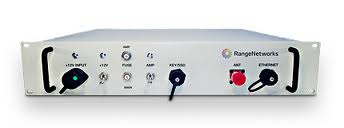
Range Networks Closes Series A Funding on the Back of Bringing Cellphones to Burning Man

Are cellphones a good thing at Burning Man? Many would say no, although if you ask me its unstoppable, so why worry about it. For the last couple of years, there has been cell service on the Playa . Range Networks built the system on open source technology and an experimental private network, and now they have raised millions of dollars.

Fierce Broadband Wireless has a story entitled “Range Networks: Burning Man’s Open Source Cellular Network Touted“. San Francisco, city of touts, of gifters and grifters (and shirt-lifters!):

A round of Series A funding has set Range Networks on a path to extend its commercial open source cellular systems beyond private networks and into the public carrier market, where it hopes to get its technology deployed in rural areas in the United States and in markets worldwide.

The funding was completed in December and was led by a couple social impact funds, which see Range Networks’ technology as key to bridging the digital divide in developing nations, David Burgess, the vendor’s co-founder and CEO, told FierceBroadbandWireless.

Range Networks, which was initially self-funded by its founders, has until now been serving the private network market with very little marketing. Deployments include a cattle ranching cooperative in Patagonia and research base in Antarctica. The company’s customers also include some small network operators in Indonesia and Zambia. Altogether, Range Networks has deployed a couple hundred systems since its founding in 2010.

One of Range Networks’ earliest claims to fame is that its technology has been used to deliver wireless communications network at Nevada’s wild and wooly Burning Man festival. The DCS1800 cellular network that the company built for the Burning Man event in 2011 attracted media and blogger coverage.

range networksRange Networks cellular systems are based on OpenBTS, its open-source software-defined radio implementation of the GSM radio access network that presents normal GSM handsets as virtual SIP endpoints. The software is available to the public for use in experimental networks. “We’re in a situation where more people know about our publicly released software than know about our company, and to some degree that’s been intentional,” said Burgess.

Range Networks is now shifting gears to target the public carrier market, thanks to the funding it recently received. “We also want to start establishing a clear connection between our software product, OpenBTS and our actual company,” said Burgess.

Read more: Range Networks: Burning Man’s open source cellular network touted for commercial rural use – FierceBroadbandWireless http://www.fiercebroadbandwireless.com/story/range-networks-burning-mans-open-source-cellular-network-touted-commercial/2013-03-28#ixzz2PQmtnbJS 

Is this another case of exploiting Burning Man for fame and money? Or, since presumably they didn’t actually close the round out there on the Playa, is it a case of “as long as it doesn’t happen at Burning Man, do all the Burner-related commerce you want”?

[Update 4/6/13]

This post has generated a lot of comments, coming down about 50/50 for and against. Here’s my own position:

Thanks Jessica for outing Range Networks as part of Papa Legba. Something tells me that camp might get Punk’d this year! I personally am on the side of Range, I’ve brought satellite phones out there for years. There’s always someone in the camp who is going to have to leave Burning Man just because they can’t get messages out. In the last couple of years, Android phones have been able to get cell service out on the Playa anyway – Range can’t be blamed for that, so why should they be vilified?
There are also some great apps like BurnerMap that enhance the experience.
The other thing we face is the reality that phones=cameras=video cameras.
I feel strongly that Range SHOULD be able to use Burning Man to raise millions, just as the dude that showed up at Opulent Temple during Carl Cox’s first ever BM set in an ankle-length glowfur coat, should be able to make millions selling Glowfur all year long “as seen at Burning Man”. If you want to fight against things like this, then you have to ban Decompressions, Trunk sales, fund-raisers for camps, and Kickstarter projects. Burning Man needs to stop making rules and banning things on the basis of “Sacred Principles” – which right now Larry Harvey at the BM Global Leadership Conference is talking about replacing anyway – and start embracing the community that makes the party with their creativity and $$$. “A rising tide lifts all boats” – let Burners profit together. There’s no point glorifying “Decommodification” and ruthlessly trying to protect the brand, when the event has now become majorly commodified and mainstream. The more popular it gets, the more ripoff merchants you will get: is the non-profit Burning Man Project going to raise funds from us just to sue the world?

We’re all different, if someone wants a cellphone, what makes you superior to them to say they shouldn’t have it? You have no idea why they need it. Maybe they’re on the medical team trying to save someone’s life. Maybe their kid just got taken to hospital. Maybe their camp ran out of drugs and they need to re-up!

I postulate a new principle: “ACCEPTANCE”. Why can’t we all just get along?