Cops Don’t Keep Festivals Clean: Hard Proof From Australia

Via The Village Voice

Via The Village Voice

I was sent this paper by a professor at NYU who I hold in the highest regard. While local authorities all around the world continue to argue about the best way to “secure” festivals, from crime and medical harm, the Aussies have done some real work. Published in this month’s International Journal of Drug Policy, Caitlin Elizabeth Hughes, Vivienne Moxham-Halla, Alison Rittera, Don Weatherburnb, Robert MacCounc of the National Drug & Alcohol Research Centre at the University of New South Wales in Sydney have made a fascinating discovery. One that, while novel, will seem obvious immediately once you understand what they proved. The core assumption they sought to evaluate the validity of seems almost common sense, yet has been at the core of the West’s strategy : Police can deter, discourage or prevent drug offending/consumption. Given that we’ve already spent $1.2 Billion in 2017 already to police and prohibit, you’d hope that the core tenet of “Police presence reduces drug offense” would be bullet-proof.

Over 4000 people took part in a Drug Policing Survey over a 5 month period. This survey asked takers (who had self-identified as regular festival/club attendees who consumed recreational drugs or had friends who did) to evaluate how certain types of police presence at clubs and festivals would cause them to change their drug taking tactics. As opposed to treating party people as some skittish, crack-addicted group that couldn’t be reasoned with, Dr. Hughes & her team depended on the festival/club attendees to evaluate scenarios where evading law enforcement was the goal. This might seem a little subversive to Americans, but even in cybersecurity, probing weaknesses using data from blackhats is worth its weight in gold. And this study was no exception.

Five different experimental vignettes were presented to the surveytakers. They were hypothetical scenarios that included an assortment of policing strategies: High Visibility Policing, Riot Policing, Collaborative Policing & Policing with Drug Detection Dogs, and a control scenario (No police presence). Essentially, how would your drug consumption or purchasing change if one of these police presence schema was used at the club or festival you attended. While any police presence led to a 4.6% reduction in overall illicit drug offending, it led to merely a reduction in people willing to carry drugs into an event or carry them on their person. Which makes sense. Ask any party person you know, they’ll probably regale you with tales of very minor substance use inside the club, maybe a few key bumps or lines in the bathroom. Very few people have the cajones to bring drugs into festivals or clubs that have big time security. They just assume they’ll purchase whatever they need inside the venue. And that’s exactly what the researchers found.

Via The Village Voice

Via The Village Voice

Given police presence, purchasing of drugs increased significantly within festival grounds. High Visibility Policing reduced overall drug offending, while Drug Detection dogs reduced drug possession the most, which makes sense. If you can see cops everywhere, you’re less likely to engage in risky shit. However, if you see drug dogs, you’re more likely to not carry, especially into the festival. And here’s the kicker. While you’re less likely to carry, you’re much more likely to buy and consume at the event.

This leads to all sorts of terrible shit, as people don’t test drugs they buy to consume immediately. Moreover, when you buy drugs from a dealer you’re likely to never have contact with again, because you’re not a regular customer, it’s that much more likely they’re going to sell you some bunk. If you’re a regular reader, you can probably guess why this concerns me. The idea that policing is not only ineffective, but also increasing the chance that drug consumers are going to take untested, is a significant departure from the “police just send drug use underground” talking point that we’ve been dealing with for years.

The truth is way more complicated of course. People do drugs in the safest way they’re able, exposing themselves to as little liability as they can while still achieving their ends. If that means buying LSD and taking it while they’re standing in line, they do that. If they prefer a drug that’s got a shorter duration, like MDMA or cocaine, some might be down to bring drugs in, but most are not willing to take that risk. That leads to the massive market opportunity that drug dealers at festivals & clubs exploit. This is simple market economics that most prohibitionists are unwilling to admit. Dealers, like life in Jurassic Park, find a way. Neatly tethered to the events of BPM, criminals will always find a way to ensure they profit from market demand. And in this case, our insatiable demand for drugs can’t even be stopped by the “North Korea with neon lighting” levels of policing that events like Electric Zoo have put forth. High definition cameras to capture buys, drug dogs and high visibility severe response policing can put a damper on drug possession or even perhaps trafficking into the event, but these types of enforcement mechanisms can’t stop consumption.

If anyone believes these findings don’t apply to the USA, I’d love to hear your reasoning. This is the type of bipartisan, public-health focused research that I think we should be relying on. As we’ve seen over the last month, attempting to appeal to morality, ethics, or some form of value system will fail and fail hard during the reign of Orange Xerxes. The only chance we have at winning is to force the conversation entirely into data and effects of current policies on the ground. A study like this is something that police, “family first” organizations and even straight up anti-drug advocates have a hard time responding to. It allows us to move the conversation from “What should America be like?” to “What actually works?” By doing so, you neatly remove the “People shouldn’t be doing drugs!” talking point from the repertoire of the advocate you’re debating with. Even if you believe people shouldn’t be doing drugs, you can’t ignore the fact that the policing schemes that are discussed in the study simply don’t work to achieve those ends.

There will always be people whose cognitive dissonance is so large that this will fall on deaf ears. But, for those who are willing to listen, discussing this study might just be a step in the door with your cop uncle or Catholic cousin. We need all the help we can get, so tread softly, avoid people who steal your bandwidth, and find consensus wherever you can. 2017 demands it.


BPM & Ending The War on Drugs: Don’t You Dare Look Away Now

Narco-sign in Playa Del Carmen after BPM shooting

Photo By Trevor Dunn

Editorial/Analysis by Terry Gotham

I’ve spent the last week interviewing people and collecting information about the worst thing to happen in live events since Orlando. Last week, the BPM Festival suffered a terrible attack, leaving 5 dead and more than a dozen wounded. Long considered one of the crown jewels of the festival circuit, this heinous attack has resulted in the local government showing BPM and all other music festivals the door. As usual, most commentary on the causes or effects either totally misses the mark or descends into slap fighting.

Photo by Semanario Playa News Aqui y Ahora

Photo by Semanario Playa News Aqui y Ahora

Before I dig into this story any deeper, I need to make a strong caveat. This commentary is in no way blaming anyone who was shot at, injured or killed for the violence that was done to them. I cannot stress this enough. While macroeconomic forces, drug cartels and America’s ineffectual responses to the growing demands for legalization are to blame for this attack, blaming BPM or BPM ticketholders for narco-terrorism is tone-deaf to the point of brutality. While I assume people will believe that was my aim to engage in some classist/leftist/racist point that serves only to divide, I believe this can be a wake up call for everyone who parties, not just those who take drugs or care about legalization, but for all Americans who believe in Constitutional rights.

According to Miguel Angel Pech Sen (district attorney of Quintana Roo, a Mexican state) at 2:30 AM, Monday morning, the security at Elrow’s closing party at the Blue Parrot was overwhelmed and the club was entered by an as-yet undetermined number of assailants. BPM declared that there was a lone gunman on the FB post about the shooting, but this has been called into question by a number of witnesses who spoke to Billboard and claimed they saw multiple shooters. The Attorney General later said it appeared there were “a lot of people carrying arms” in the club, and that many of those wounded were hit when security personnel were attempting to shoot the attacker. The attacker escaped, he said, and may have been assisted by a taxi in getting away. Three members of security died, a 4th, who seemed to be the target, and a fifth person died in the stampede to escape the club.

After the shooting at the Blue Parrot, the violence raged across Playa Del Carmen for the rest of the week. On Tuesday, a “Code Red” was activated in Cancun when the Control Center for Command, Computing & Communications was attacked by 10 armed men who arrived by motorcycle. Their goal was to extract a local drug cartel leader from holding, not kidding. Avenues in Cancun were attacked with fucking grenades, while shots were reported inside of the Plaza Las Americas Shopping Center. Narco-signs (messages from the cartels) sprang up, with the Zetas claiming responsibility and announcing that more violence was to come. Again, Playa Del Carmen banned not just BPM, but electronic music festivals, in case you had tickets to the Arena Festival, slated to go on in the beginning of February.

At this point, I hope it’s clear that this is a situation that the police and military do not have under control. While plenty of American and Canadian party people live blissfully unaware of the spiral of drug-fueled violence that Mexico is enduring, we need to stop pretending “this is fine.”

mexican-safety-map

Whether it’s the Fast & Furious gun program, Hillary’s refusal to support legalization, or the psychedelic libertarianism I’ve written about before, the indifference to legalization as a priority has put billions into the hands of cartels that have much of Latin America by the balls. MS13, the Zetas, the Sinaloa Cartel, and dozens of others we’ve probably never even heard of have rained suffering and death across so much of our hemisphere. Our continued inability to care about the problems that come with drugs, namely opiate abuse by the poor and swelling the coffers of organized crime, has all but ensured that tragedies like the one that befell the Blue Parrot will keep happening anywhere the drug war has touched.

I don’t want to hear that legalizing drugs will just cause the cartels to make money somewhere else. The revenue is non-trivial. Even before legalization hit, the RAND Corporation and the Mexican Institute of Competitiveness estimated that almost 30% of cartel revenue (not profit) came from cannabis. With legalization, we’re already seeing cannabis seizures drop:

In the Border Patrol’s San Diego sector, marijuana seizures fell to 8,158 pounds in fiscal 2015, an 88 percent drop compared to a decade-high of 68,825 pounds seized in fiscal 2011…As marijuana seizures have declined, other drugs including heroin, cocaine and methamphetamine are skyrocketing at the border. Traffickers are capitalizing on the growing opiate epidemic, as well as their ability to cheaply produce enormous amounts of pure meth from Chinese precursor chemicals in Mexican “superlabs.”
~San Diego Tribune

Source: Washington Post

It’s not just along the California border. According to the US Border Patrol, cannabis is just not showing up at numbers it used to be anywhere they’re seizing it:

But the amount of one drug — marijuana — seems to have finally fallen. U.S. Border Patrol has been seizing steadily smaller quantities of the drug, from 2.5 million pounds in 2011 to 1.9 million pounds in 2014. Mexico’s army has noted an even steeper decline, confiscating 664 tons of cannabis in 2014, a drop of 32% compared to year before.
~Time

The Zetas aren’t super-villains from the 50’s. They know how much money they can make getting certain substances over the border and into the hands of eager consumers. This connects back to parties almost depressingly well. How many people do we all know that expect there to be drugs for them to buy at parties? How many of them honestly give a fuck about whether they’re legal or not? Just think of the thousands of party people who demand farm to table, vegan/vegetarian or some other form of “I don’t consume things made unethically” cuisine, but then proceed to put $200 worth of possibly Peruvian Cocaine up their noses. I really think we should be more concerned about the lives of indigenous people living under cartels than whether our almond milk was sprayed with pesticide before it landed in my smoothie. As a dear friend put it, we couldn’t stop the Orlando mass shooting, but decriminalization/legalization probably would have stopped this shooting.

stratfor-map-2014

You need to ask yourself, if this shooting happened at a club on the beach that only Mexicans went to, and had nothing to do with BPM, would you have cared? Would you have even seen it on your news feeds? I’ve spoken to dozens of Clinton supporters over the last 18 months who strongly supported her not legalizing. If the Zetas weren’t able to wholesale pot into every city in America outside of a handful of states, would they be able to buy weapons and commit crime? Of course. But certainly not to the levels that they’ve been able to in the last several years.

Not a lot of people remember this, but over a decade ago, we deported a bunch of MS13 members, trying to break the back of the gang. This backfired so spectacularly that MS-13 chapters cropped up all across Latin America, accelerating its growth from a few thousand members in LA to an international cartel, possessing a massive supply chain and a network that rivals most intelligence services. We trained & funded the 34 commandos that eventually flipped the script & became Los Zetas. Remember them from earlier in the article? Yup, the very same. Our efforts to stop people from doing drugs are directly responsible for this shit. The blood of party people is on American hands.

But don’t think this is anything new. Whether it was Al Capone and the bootleggers profiting from prohibition, the evolution of disco and cocaine, house dealers in the superclubs of the 1990s & 2000s or the flood of adulterated psychoactive substances that find their way into the hundreds of music festivals occurring in North America every year, Americans have partied for decades without agitating for legalization. While the mob did move on to other illegal activities once Prohibition ended, you bet your ass they jumped right back into trafficking once drug prohibition returned in the 20th Century. Until we (whether we do drugs or not) demand decriminalization/legalization and an end to the DEA/ATF/FBI/CIA’s fuckery south of our border, we should expect things like this to keep happening. Some people are fine with throwing up our hands, giving up and only partying/consuming illegal drugs made within our national  borders, but that still resigns millions of our fellow citizens to a fate of incarceration, underemployment and a life controlled by the scarlet letter of conviction. People demand the ability to modulate the contents of our minds. We should allow them to, and join them in ensuring they can, legally…if only to ensure a horrific attack like this one never happens again.

Lazarus Parties, Heroin & the Continued Evolution of Harm Reduction

I’m taking a quick break from my series on the History of Addiction & Society because I’ve been tracking a disconcerting story for the last week. You may have seen it posted by one of your more conservative/pearl clutch-y friends this week, and if not, expect it before election day.

A smattering of local coverage, based around Toledo, Ohio, describes a Lazarus or “Narc” party. Heroin users will do heroin with other users, and in case one of the users overdoses, a sober person who isn’t using, administers Naloxone, or by its common retail name, Narcan. The implication is that because a user was standing by with Narcan, that’s the actual problem. The presence of the OD reversal substance is emboldening heroin users. To test their limits, or to even try using it in different ways, like shooting it, instead of just snorting or smoking it. Instead of preventing death, some are attempting to claim it’s making some people’s use more adventurous.

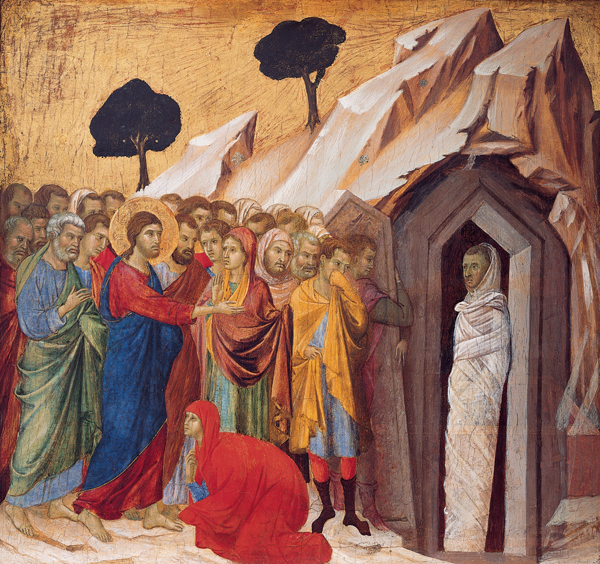
To research the work I release here on Burners.me, I maintain a quiet presence in a lot of different circles, so a lot of the time, I get to experience how mutually exclusive groups respond to stories. Today, I saw both a pool of researchers, doctors, law enforcement officials AND a group of ravers, talking about the same story, this “Lazarus Party” story. Oh yea, and in case you didn’t go to Sunday School, it’s called a Lazarus Party, because Jesus raises Lazarus from the dead as proof of his Jesus-ness. But, here’s the thing. Are there any actual, confirmed reports of recreational users calling them Lazarus Parties? No, of course there aren’t. But there “might” be, especially if you believe poorly sourced news & blowhards with agendas. Just in case you don’t believe me, ask a member of each political party their thoughts on FBI Director Comey & his investigation, and you’ll see how easily facts can be distorted or ignored to suit a pre-existing bias.

Larry Clark -

Larry Clark – “Tulsa” (1971)

What was amazing about what I saw, was the same mixed field of ignorance, trolling and reason within two opposite populations of commenters. One was a thread where you saw users, scenesters, and sober party attendees, the other was  entirely by people with respectable, well paying jobs, in and around the substance use, abuse & control sectors. Having the same argument. It’s one thing when two of your hippie festival friends argue about the purpose of “Narc” parties, with the dude who has the Deep Mind Acid filter on his profile picture, correcting a burn out when it comes to how Naloxone is used. It’s quite another thing when an ER Coordinator makes the same correction to someone who works in a rehab program.  The two arguments raged all day. At the time of writing, the festie kid argument had died down, but the med/substance abuse professionals was still going back and forth, and did so long into the night. And you thought you took your job home with you.

The facts of the situation are slightly less terrifying. Because Fentanyl, Carfentanyl, U-47700, W-18 and an array of other substances are present in the recreational opiate supply, opiate users have begun to switch off dosing to ensure they’re not all high if someone OD’s. The reports elaborated that people were starting to do heroin in groups more, in response to the tidal wave of Fentanyl-exacerbated OD deaths currently plaguing North America. Of course, if more than 1 person is doing an illegal drug in a room, the media thinks it’s a party.

The inherent idiocy in this line of reasoning should be apparent to everyone who has watched fear mongering and confusion go hand in hand. Thankfully, every time I saw this discussion occur, the intelligent and sensible among those willing to comment rose to the occasion and reminded everyone involved that harm reduction and opiate usage patterns evolve with time. In this case, it looks like people are starting to understand the inherent dangers of their habit, and pivoting around them. Not because they want to do “more drugs” or have a party, but because they don’t want to die. This seems like a no-brainer, but it’s actually deeply subversive when it comes to the traditional line of reasoning that prohibitionists use.

chicago-vice

In both this case, and the example from last week, the idea that drugs take control of you, or that you can’t engage in rational thought while under the influence, was the central pylon in the argumentative infrastructure supporting the case that all drugs are bad and humans shouldn’t have the choice to consume substances, especially to excess. But the narrative that I heard from both elder ravers and MD’s who ran emergency rooms was just the opposite. These “Narc” parties are nothing more than opiate users understanding the conditions on the ground and attempting to prevent bad things from happen to people they care about. Which is the very definition of harm reduction. They know no one is going to stop doing heroin, even when it might be spiked or adulterated with a substance that could kill them.

This point was so well defended, that opiates don’t turn people into zombies, people actually started to understand individuals with physical addiction and a fear/aversion to withdrawal exist. They were looking out for each other, and will continue to do so. I got to see some excellent harm reduction advice dispensed by a forensic toxicologist, so I wanted to share it with y’all, in case this stuff was useful for you:

  • Don’t use alone. Use a buddy system, to have someone who can call 911 ( and give Narcan) in case you stop breathing.
  • Learn how to use Narcan if you plan on using street heroin.
  • Even if you know how to use Narcan, test your drugs.
  • Do the same for another addict.
  • Don’t inject at the same time. Stagger your injection times.

These seem like no-brainers to most of us, but sometimes it’s easy to forget. Phillip Seymour Hoffman forgot. So did Prince. We live in an age where adulterants are far more dangerous than even some of the most problematic recreational drugs. And users are recognizing that, leading them to consume with others, and to learn how to reverse overdoses. That sounds like progress to me. Not something to be afraid of, and certainly not a reason to remove Narcan from the hands of those that consume opiates. Let the people save each other, since the powers that be don’t seem all that concerned about saving them.